
On Time
What the French Taught Me About Taking Time Instead of Chasing It

Bonne année, mes chers lecteurs !
Love, beauty, and success to you all — but surtout, la santé, like the French say. Merci for reading, for subscribing and taking time from your busy lives to read.
Time isn’t a personality trait in France.
It isn’t languid DNA. The French get anxious too. They get flustered, they rush, they mutter at traffic lights, they curse at steering wheels when the city pushes back. My French husband thinks I drive like someone trying to annotate the street rather than beat it. « Sois plus agressive ! » he says, hand braced on the passenger handle. Paris time lingers, but it honks. Just not on the same minutes Americans honk on.
I learned time through a different clock — the American one.
In my twenties, I opened Starbucks in Waikiki at 4 a.m. local time. The alarm was set for 2:45. Every minute was accounted for — the 7-minute drive, the 2 minutes to walk from parking to locked doors. The streets smelled like ocean salt, delivery trucks, nightlife regret. Surfers arrived before sunrise had found its posture. Tourists ordered coffee with a side of emails. Productivity began early because early looked admirable.
Then I moved back to Paris and realized my clock had jetlag. Philosophical jetlag.
In America, busy looks glamorous. Packed calendars look like worth. A morning conquered before 7 a.m. looks like discipline. Meditation apps count streaks, rings vibrate reminders to “find time to pause,” sleep is optimized and celebrated like efficiency hardware.
In France, you leave the hour unscored so thinking has somewhere to land.
Paris time is not slow. It is long. Confident long.
There’s a glamour in the unplanned hour here. A walk through Paris is not measured by where it leads, but by what it suggests back. A restaurant chosen by wandering isn’t a failure to plan. It’s a different kind of plan: one that expects time to participate.
Time in America is compressed for output.
Time in France is expanded for imagination.
In America, you schedule reflection like a meeting with yourself.
In Paris, reflection happens because the hour had room to host it.
In America, a delayed meeting is inefficiency.
In Paris, a delayed meeting is Tuesday, absorbed without audit.
Americans apologize for being offline.
The French apologize for rushing into the hour, not through it.
Both want meaning. Only one fears the minute.
An hour in New York can feel scored before it begins.
An hour in Paris is scored only after you’ve sprinted through it.
The contrast shows itself in what you didn’t plan to notice.
One January, an American friend visited me in Paris. We set out at 7 a.m., assuming the city would hand her caffeine on arrival. We crossed Boulevard Saint-Germain in the cold, coats buttoned to the chin, scarves wound like protective parentheses. The city looked at us blankly. No café door opened back. She laughed nervously. “Do you think anything is open?” she asked, already checking her phone like the street might not answer unless prompted.
The street answered anyway, later, when we stopped interrogating the minute.
Planning trips for American friends taught me this too: they want the timestamp, the route, the confirmation, the reassurance that the day will produce something. The French plan where to go, but they always leave the when porous enough for life to write itself back in.
Time here bends around life, not proof of life.
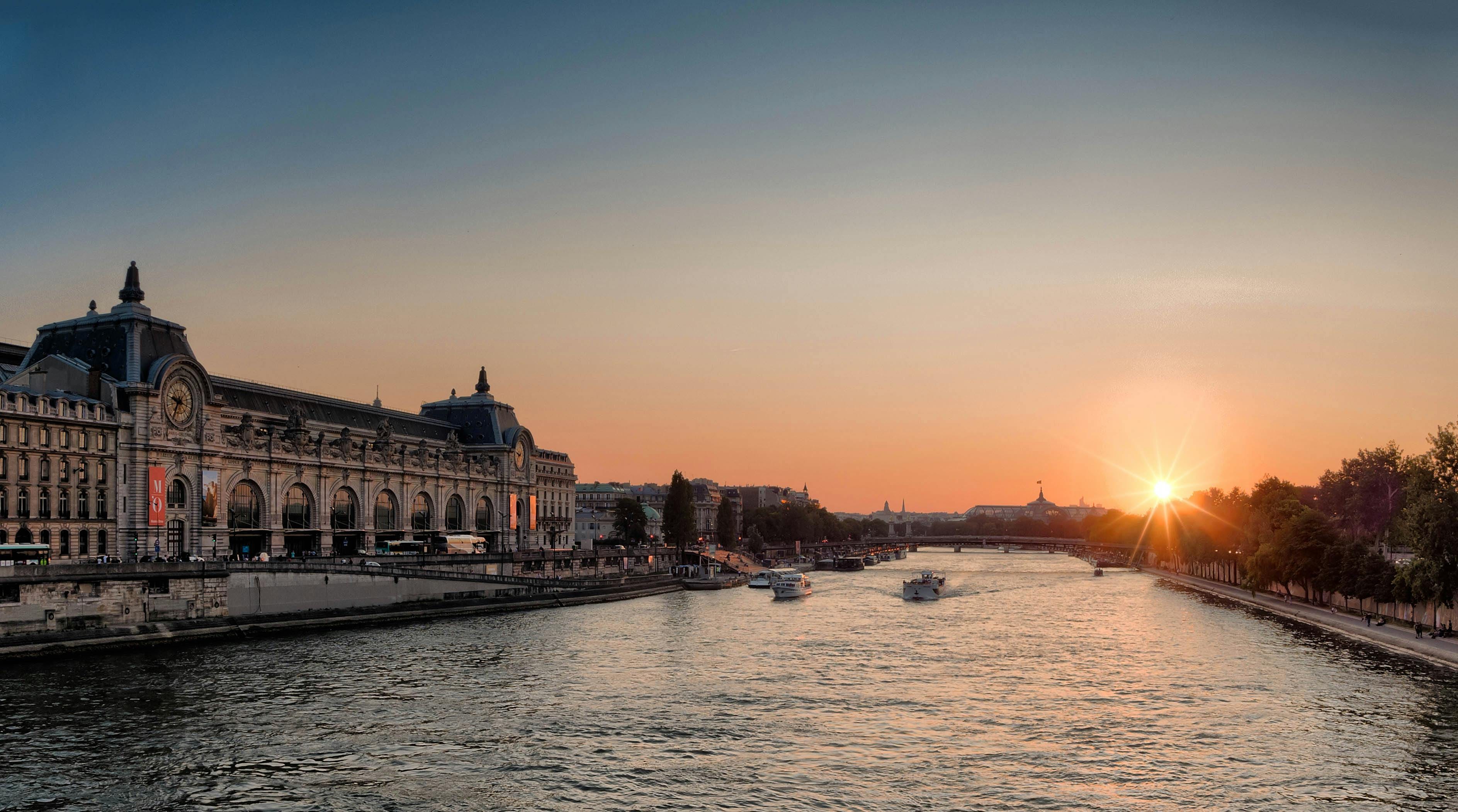
The last few weeks have made the American clock feel louder in its reminders of fleetingness — alerts, headlines, year-end pushes. In France, fleetingness is felt too, but time is still treated like a landscape, not a stopwatch.
What I’ve learned is that time is not precious because it is productive.
Time is precious because it leaves without asking if we were ready.
And maybe that’s the irony that unites both sides of the ocean:
Americans perform busyness to prove they’re not losing time.
The French refuse to perform anything for time, except living inside it long enough to feel it imprint.
I’ve absorbed this instinctively. Not ideologically. Physically.
I plan fewer minutes now. I plan more unscheduled hours — hours to wander, think, or simply let the street answer back.
This year, I want to resist the American urge to time block, to color-code and to treat time as something to master. I want to treat it as something to notice passing through me, culture to culture, ocean to ocean, decade to decade.
If this year has one gentle intention worth setting, it might be this:
Noticing that the best moments are the ones not rushed through, the ones that were long enough to imprint, not to prove.
Thank you for reading.
À très vite,
Pamela
Personal thoughts enriched by Jane Bertch’s beautiful piece on time, which I encourage you to read next.
More dispatches from Paris — at The Parisialite.
You've completely nailed it... In articulating the American view and treatment of time. Though I didn't grow up in the US, I've been completely influenced by it and it's something I experience in my corporate work. 2025 was a very exhausting work year for me, with the back-to-back virtual meetings that are time-boxed and you have to apologise for even being a minute later.
Quite ironic that I work best when "time runs away" from me. I know that's a very American way of phrasing it. But to put it another way, its when I allow myself to savour the time I have and be in flow.
Thanks for sharing this. It's a reminder to me to live more in the Parisian way (even if I'm not based in Paris) with regards to time, to a certain extent that the situations I'm in can allow.
Thank you, Pamela.